Leather Font Review: Elevating Small Business Branding
Last Tuesday, I found myself staring at a stack of plain kraft paper boxes for a local artisan candle client. The product inside was exquisite—hand-poured soy wax with complex fragrance notes—but the packaging felt disconnected from that premium experience. We had tried three different typefaces already: one was too corporate and sterile, another was so ornate it became illegible on a small jar label, and the third simply lacked personality. As a creative consultant helping small businesses refine their visual identity, I know that typography is often the silent dealbreaker between a product looking "homemade" and looking "handcrafted with intention." That afternoon, we tested the Leather font, and the shift in the brand’s perceived value was immediate.
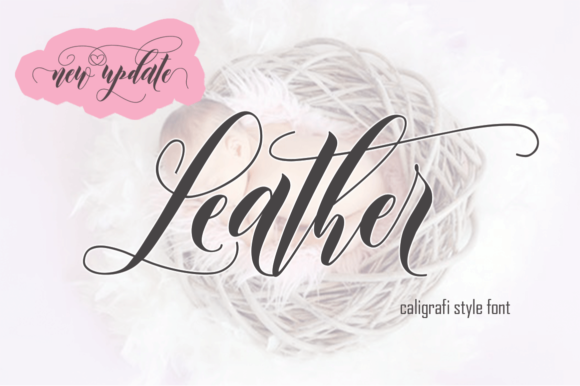
Leather is categorized under Script Amp fonts, but calling it merely a script typeface doesn't quite capture its utility for business owners. It strikes a rare balance in modern typography: it possesses the organic warmth of a handwritten font while maintaining the structural elegance required for professional packaging design. When we applied it to the candle labels, it didn't just spell out "Lavender & Sage"; it conveyed a mood of rustic luxury. For small business owners, entrepreneurs, and makers, finding a display font that feels personal without sacrificing polish is a constant challenge, and Leather solves this specific branding friction point beautifully.
Translating Handwritten Charm into Professional Packaging
The primary strength of Leather lies in its versatility across physical touchpoints. In our candle project, we needed a typeface that could handle the hierarchy of information on a 3-inch circular label. Many decorative fonts fail here because they are designed solely for large headlines. However, Leather retains its character even when scaled down for secondary text like scent descriptions or safety warnings, provided you use the extra characters included in the file. These alternates and ligatures are not just aesthetic bonuses; they are functional tools for customizing your brand identity.
When designing product labels or boutique tags, consistency is key to building trust. Customers subconsciously associate typographic cohesion with quality control. If your logo uses a playful script but your ingredients list uses a mismatched system font, the disconnect creates cognitive dissonance. Leather offers enough stylistic range to serve as both your primary display font for the product name and a complementary accent for shorter phrases. During our redesign, we used the standard glyphs for the main title and utilized the swash alternates for the tagline. This created a bespoke look that felt expensive, yet remained entirely readable—a crucial factor for retail environments where customers scan shelves quickly.
Digital First Impressions and Social Media Graphics
Beyond physical products, Leather proves exceptionally useful for digital brand building. Small businesses today must maintain a consistent visual narrative across Instagram templates, website banners, and email newsletters. A common pitfall I see in social media graphics is the overuse of trendy, ultra-thin scripts that disappear against busy photography backgrounds. Leather has enough weight and presence to hold its own against textured product shots or lifestyle imagery.
For an online shop banner or a promotional graphic, readability on mobile screens is non-negotiable. Because Leather mimics natural handwriting rather than rigid calligraphy, it feels approachable and friendly on smaller devices. We tested it on a series of Instagram stories promoting a seasonal sale, and the engagement metrics suggested that the warmer, more human typography resonated better with the audience than previous minimalist sans serif designs. It bridges the gap between editorial design and personal connection, making digital ads feel less like advertisements and more like invitations. Whether you are a coach creating quote cards or a baker showcasing new menu items, this typeface adds a layer of authenticity that stock photography alone cannot achieve.
Strategic Font Pairing for Complete Brand Systems
No font exists in a vacuum, and Leather shines brightest when paired intentionally. While it works wonderfully as a standalone hero font for logos or short headers, building a full brand identity requires supporting typography. As a general rule for non-designers, contrast creates clarity. Since Leather is a fluid, expressive handwritten font, it pairs best with structured, clean companions.
- With Sans Serif Fonts: Pairing Leather with a geometric or neo-grotesque sans serif creates a modern, contemporary aesthetic. The rigidity of the sans serif grounds the playfulness of Leather, making it ideal for tech-adjacent creatives, modern beauty brands, or minimalist home goods shops.
- With Serif Fonts: For a more traditional, heritage, or literary feel, combine Leather with a classic serif font. This combination evokes nostalgia and craftsmanship, perfect for bookstores, heritage bakeries, wedding stationery, or antique boutiques.
- With Monospaced Fonts: For an edgy, editorial, or raw aesthetic, try pairing Leather with a monospaced typeface. This unexpected contrast works well for streetwear brands, art galleries, or zine creators who want to signal creativity and rule-breaking.
The goal of font pairing is to guide the customer’s eye. Use Leather to capture attention and evoke emotion, then use your secondary font to deliver detailed information clearly. This hierarchy ensures your marketing materials are both beautiful and functional.
Practical Considerations for Commercial Use
Before integrating any new creative font into your business assets, due diligence is essential. Leather comes with loads of extra characters, which is fantastic for customization, but it also means you should test the specific glyphs you need before finalizing print files. Always check the multilingual support if your customer base includes non-English speakers, as missing accents can undermine the professional polish you are trying to achieve.
Licensing is another critical aspect for small business owners. Ensure you have the appropriate commercial license for your intended use. Using a font for personal crafting is different from using it on merchandise for sale, digital downloads, or client work. Respecting intellectual property protects your business from legal issues and supports the type designers who create these valuable assets. Additionally, verify the file formats included; having access to OTF, TTF, and WOFF files ensures you can use Leather seamlessly across Adobe Illustrator for packaging, Canva for social media, and Shopify for web design.
Ultimately, typography is an investment in your brand's reputation. Leather offers a unique opportunity for small businesses to elevate their visual presence without hiring a full-time designer. It brings the tactile warmth of handwriting into the digital and printed realms, helping handmade sellers and entrepreneurs communicate quality, care, and consistency. Whether you are refreshing a café menu, designing thank-you cards for orders, or launching a new skincare line, this typeface provides the elegant foundation necessary to make your business memorable. In a crowded marketplace, the difference between being overlooked and being cherished often comes down to the details, and Leather is a detail worth getting right.